The “Perfect Clientele” myth
The idea of the “perfect client” is often presented as a reward -something that comes after enough hard work, patience, and compromise. If you stay flexible long enough, grateful enough, available enough, the right clients will eventually find you. But this promise quietly reshapes how photographers are expected to behave long before that point is ever reached.
Emotional Labor, Gratitude, and the Cost of Always Saying Yes
The idea of the “perfect client” is often presented as a reward, as something that comes after enough hard work, patience, and compromise. If you stay flexible long enough, grateful enough, available enough, the right clients will eventually find you. But this promise quietly reshapes how photographers are expected to behave long before that point is ever reached.
Perfect clients, in theory, respect boundaries, trust creative decisions, and understand the value of the work. In practice, many photographers spend years working with the opposite, while being told that this is simply part of the process.
Flexibility as a Default Expectation
Flexibility is often framed as professionalism. Adjusting timelines, accommodating last-minute changes, answering messages outside working hours. It’s all treated as evidence of commitment. Over time, flexibility stops being situational and becomes assumed.
What’s rarely acknowledged is that this flexibility is emotional as much as logistical. It means absorbing uncertainty, managing other people’s anxieties, and smoothing over tension without letting it show. Saying “no” begins to feel risky, even inappropriate, especially when income depends on being perceived as easy to work with.
At some point, flexibility stops serving the work and starts eroding the person doing it.
The Burden of Gratitude
Photographers are often expected to be grateful simply for being chosen. Gratitude becomes a performance: for the opportunity, for the exposure, for the chance to work, even when the terms are unbalanced.
This expectation creates a subtle hierarchy. The client is positioned as the giver of opportunity, the photographer as the recipient. Questioning fees, timelines, or creative direction can feel like ingratitude rather than negotiation.
Over time, this dynamic can make photographers doubt their right to ask for more - more clarity, more respect, more space to do their work well.
Availability and the Loss of Boundaries
Being available is frequently confused with being dedicated. Late-night emails, weekend revisions, constant accessibility - these are normalized to the point where boundaries seem unreasonable.
The emotional toll isn’t just exhaustion; it’s a gradual disappearance of separation between work and self. When your responsiveness becomes part of your value, stepping back can feel like professional self-sabotage.
Some photographers begin to realize that the cost of constant availability is not just burnout, but a narrowing of creative energy itself.
Choosing Not to Be “That” Photographer
At a certain stage, some photographers decide to stop performing endless flexibility. Not dramatically, but deliberately. This decision is often imagined as something that happens once a photographer’s work and style are fully formed, after years of experimentation, once confidence is unshakable and demand is steady enough to absorb loss.
But this raises a quieter doubt: does that moment ever actually arrive?
Many photographers delay drawing boundaries because they believe their work isn’t “there” yet. They assume refusal requires authority, and authority comes only after a style has been perfected and widely recognized. Until then, they remain treating emotional endurance as a temporary investment in a future self who will finally be allowed to say no.
For many, the choice not to be “that” photographer doesn’t emerge from confidence but from exhaustion. It happens after realizing that constant availability has narrowed creative energy. Often this shift is subtle: firmer timelines, fewer apologies, a growing willingness to be misunderstood.
This decision may not look like a clean break. It’s a recalibration that has to be repeated as circumstances change. The question becomes less about whether a photographer has earned the right to stop accommodating, and more about how long they are willing to wait for permission that may never come.
Rethinking the Ideal
The myth isn’t that good clients don’t exist - it’s that enduring poor conditions is treated as the price of reaching them.
A more honest question might be: Is the goal to find perfect clients, or to stop accepting dynamics that require constant emotional self-erasure?
Not every photographer answers this the same way. Some continue to adapt. Others draw lines. Both choices carry consequences, but only one acknowledges that emotional labor is not an unlimited resource.

Too Tired to Shoot: Photography in the Burnout Economy
In a creative economy that rewards constant output over genuine expression, photographers are burning out at record pace. The camera or photographer isn’t the problem - the system is. This article exposes how the grind culture of social media is draining the soul from photography, and why some are choosing to slow down, leave photography, or redefine success on their own terms.

There’s a moment - quiet, gut-wrenching - when the camera stays in the bag for weeks, not because the photographer is not getting gigs, but because there is no will. Burnout does not come with fanfare or a bang - it creeps in slowly, masquerading as creative block, low engagement, and numb-layering of "content creation" passing as art. As we move into 2025, the biggest risk to photographers may not be AI, shrinking budgets, or a euphoric sense that giving away art to garner visibility is acceptable - but the relentless expectation of being visible, productive, and optimized - without a break. And many are buckling.
The Always-On Creative Economy
Photographers are no longer working for the frame, they are working for the feed.
The photography hustle has morphed with the rise of and reliance on algorithmically driven platforms like Instagram, TikTok, and YouTube. Photographers no longer just have to shoot and edit, they also have to brand, perform, and publish quickly. Being visible has become a currency - and like all currencies, it slowly loses value every hour. Lose a post and you lose visibility, take 2 day's rest and risk losing relevancy.
There was a time when quality could stand on its own. Now, it's quantity - or rather, consistency - that rules. Creators are rewarded not for mastery, but for output. The shift from artist to “content creator” isn’t just semantic. It is systemic, and it is psychological.
“I got into photography to make images. I stay in it by pretending to be a marketing team, a production house, and a publicist. The actual shooting part? That’s maybe 10% of my week.”
– Freelance portrait photographer, anonymous
The Mental Health Toll
Photography, like many creative disciplines, has long carried the illusion of the dream job. For some, it still is. Do what you love, they said. But passion doesn’t shield you from pressure. If anything, it makes the pressure more corrosive - because when you burn out, you don’t just lose a job. You lose a part of your identity.
Depression, anxiety, creative paralysis - these are now occupational hazards. Photographers wake up with dread, not inspiration. For some, even success has become hollow; chasing metrics day after day leaves little room for enjoying the process and feeling self fulfilled.
There are no exact statistics on creative burnout in photography, but the anecdotal wave is loud enough. Posts about quitting or taking long social media breaks are no longer rare - they’re routine.
“I spent two years building an audience. And one day I realized: none of them cared what I had to say, only how well I could edit skin tones.”
– Lifestyle photographer turned educator
There’s also a deeper, more insidious layer: shame. Admitting to burnout can feel like failure. After all, isn’t this what you wanted?
Coping Mechanisms That Don’t Work
The internet is full of productivity hacks designed to keep creatives grinding: batch your content, schedule your posts, automate your outreach. Repurpose. Recycle. Keep moving.
It’s a trap.
These are coping strategies for a system that’s fundamentally broken. Instead of reducing stress, they institutionalize it - giving the illusion of control while still feeding the same attention economy beast.
What’s worse is that these tactics often ignore the fundamental truth of photography: it’s not a commodity process. It requires space - mental, emotional, and temporal. Compressing it into a rigid, endless posting schedule doesn’t just drain energy. It warps the work.
“You can only ‘optimize’ your art so much before it stops being art.”
– Documentary photographer, Berlin
A Different Path – Photographers Pushing Back
The good news? Some creatives are rejecting the hustle - and rebuilding their practice on their own terms.
Photographers like Emeka Okereke and Aline Smithson have championed “slow creation,” intentionally reducing their output to focus on meaningful, often long-form work. Others have turned to physical media: photobooks, zines, and gallery exhibitions, reclaiming the tactility and intentionality that digital often erases.
Workshops and retreats focused on artistic reflection - not metrics - are seeing a resurgence. There's a reason analog photography is back in vogue: it's not nostalgia. It's resistance.
And then there’s the community-driven alternative. Platforms like Glass and Vero, which reject algorithmic feeds, are gaining quiet traction as sanctuaries for visual artists looking to escape the noise.
“Going slower isn’t failure. It’s how I found my voice again.”
– Photographer and zine publisher, UK

Redefining Success
Burnout isn’t just personal. It’s structural. If we want photography to survive as a meaningful craft, not just a content stream, the industry - and the culture around it - needs to change.
That means rethinking what success looks like. Is it follower count? Engagement rate? Or is it the freedom to create without compromise?
In a world that equates visibility with value, the most radical act might be to go offline - to create for yourself, not just for the feed. To protect your creativity like the scarce, non-renewable resource it is.
“You don’t owe the algorithm your soul.”
– Artist statement, posted anonymously
What’s Next?
In future posts, we’ll explore:
How alternative platforms are trying to rebuild photography communities from the ground up.
The economics of slow creation - can you make a living without selling out?
And conversations with photographers who’ve quit entirely - what they’ve learned, and what they’re rebuilding.
Burnout is real. But so is recovery. The first step? Stop pretending the hustle is sustainable.

Beyond the Lens: How Photographers Are Responding to Modern Industry Challenges
In a rapidly changing visual landscape shaped by AI, influencer marketing, and shifting client demands, photographers are redefining their roles. This article explores how professionals are adapting—through diversification, embracing community, and confronting the challenges of AI-generated content—while pushing the boundaries of creativity and authorship.

To explore more of what we described in one of the recent posts on this website - the digital age has never moved faster - and for photographers, the pace of change feels more like a sprint than a steady evolution. From the rise of AI to shifts in how visual content is consumed and commissioned, photographers are being forced to adapt in ways that would have been unthinkable a decade ago.
This article explores how the industry is shifting, how creatives are responding, and why community, creativity, and adaptability are more important than ever.
A Wake-Up Call: Barriers in the Industry
Live Nation’s recent decision to bar independent photographers from concerts isn't just an isolated incident; it's a symptom of a wider transformation affecting the entire visual arts ecosystem.
“We used to get paid in bylines and backstage passes. Now we’re replaced by someone with a phone and 50K followers.”
- Anonymous freelance concert photographer
As AI-generated content floods social media feeds and corporations prioritize influencer marketing over professional artistry, traditional photographers are left asking, “Where do I fit in?”
Many professionals have responded by expanding their skillsets. Renowned photojournalist Lynsey Addario, known for her conflict-zone work, has spoken about the need to adapt not just in content but also in medium—branching into video documentary work and multi-platform storytelling to keep up with how audiences consume news.
Wedding photographers are another case in point. As AI editing tools become more advanced, many have pivoted into offering premium, handcrafted editing styles or hybrid photo and video services that emphasize the human touch—something machines can't replicate (at least not at the moment).
AI as Threat and Tool
The rise of AI-generated imagery - whether it's Midjourney-style creations or deepfake photo realism - has rattled many in the industry. Photographer and artist Trevor Paglen, for example, uses AI in his work to critique surveillance and question the role of machine vision in society. Others are integrating AI tools into their workflow for efficiency - automating tedious tasks like sorting, metadata tagging, and even rough edits - while preserving creative decisions for themselves.
Obviously, not everyone is happy with the raise of AI. In 2023, German photographer Boris Eldagsen made headlines when he declined a prestigious photography award after revealing that his winning image was AI-generated. His intent was to spark a conversation about transparency, authorship, and the future of photography as an art form.
“I wanted to test whether the world is ready for AI images to compete in photography contests. It’s not.”
- Boris Eldagsen, after declining a photography award for his AI-generated image
On the other hand, artists like Malik Afegbua have embraced AI as a creative partner - using it to produce visually striking narratives, like his “Elders Series,” that blend cultural storytelling with machine-generated aesthetics.
“You know what the biggest problem with pushing all-things-AI is? Wrong direction. I want AI to do my laundry and dishes so that I can do art.”
- Joanna Maciejewska, artist & photographer
It’s a controversial line to walk: adapting without compromising artistic integrity. As AI tools grow more sophisticated, the challenge becomes not only technical but philosophical - how to stay human in an increasingly automated medium.

Community Over Competition
Another trend: building community. Yes, something still quite unfamiliar to many photographers - as well as supporting each other rather that criticising each other’s artistic choices. Some photographers have shifted from the hustle of gig-based work to creating educational platforms, Patreon accounts, or private workshops. These allow them to connect with audiences directly, share their knowledge, and maintain creative control—bypassing corporate gatekeepers.
Photographers like Dani Diamond and Brandon Woelfel have cultivated massive followings by not only sharing their work but demystifying their process. They’ve created spaces where aspiring photographers can learn, engage, and grow. This shift toward openness marks a break from the traditionally competitive, often solitary nature of the industry.
“The era of the lone wolf artist is over. Our strength now is in how we uplift each other.”
- Brandon Woelfel, photographer & educator
“I joined Women Photograph just to find a network—and ended up finding purpose.”
- Community member via Diversify Photo
More and more, photographers are finding that collaboration and transparency can be powerful tools. Online communities like the Honest Photographer subreddit or collectives such as Diversify Photo and Women Photograph have emerged as spaces where creatives support each other through shared resources, critiques, and opportunities.
In a climate where algorithms reward constant output and perfection, these communities serve as a counterbalance - prioritizing process over polish, dialogue over metrics.
Rather than gatekeeping, the emphasis is increasingly on lifting others up. It’s not just about building a brand anymore - it’s about building a network.
What’s Next?
The future of photography may not lie solely in resisting change, but in reshaping it. As the industry veers into new terrain - blurring the lines between real and artificial, artistry and content - photographers are being forced to ask hard questions.
But in doing so, many are finding bold, unexpected answers.
In upcoming posts, we’ll dive deeper into specific case studies, the impact of AI on licensing and copyright, and how younger generations are redefining what it means to be a “photographer” in 2025 and beyond.


Navigating Creative Constraints: Finding Freedom Within Limits
Discover how professional photographers embrace creative constraints—from client expectations to time and budget limits—and transform them into powerful storytelling tools. Learn why limitations can enhance your creative process and how to thrive when artistic freedom isn't absolute.

As photographers, we often romanticize the idea of complete creative freedom — wandering through golden light, chasing perfect compositions, and crafting visual stories with no rules but our own. But the reality behind the lens is far more complex. More often than not, creativity exists within constraints — and that’s where the real magic (and challenge) lies.
The Illusion of Limitless Creativity
In a perfect world, we’d have unlimited time, dream locations, a generous budget, and clients who say, “Do whatever you want.” But in practice, those conditions are rare. Most projects come with a framework — and sometimes that framework feels more like a cage than a canvas.
From strict brand guidelines in editorial work to the unpredictable chaos of wedding timelines, photographers are constantly navigating a push-and-pull between artistic vision and real-world limitations. You might have only 10 minutes of ideal light, or you’re shooting in a location that doesn’t match your mood board at all. Still, you’re expected to deliver images that feel inspired and effortless.
Client Expectations vs. Artistic Voice
Balancing client needs with your personal style is a dance — and not always a graceful one. Some clients come with a clear vision (or Pinterest board) and expect it replicated, even if it doesn’t align with your creative instincts. Others give you vague direction and expect brilliance without guidance.
For wedding and lifestyle photographers, it’s about honoring the couple’s story and aesthetic while still injecting your own perspective. For fashion photographers, it’s working within a brand’s visual identity — sometimes tightly controlled — while still finding space to make the work feel fresh, editorial, and you.
It’s here that the challenge turns into craft: the ability to make creativity bloom within boundaries.

The Unexpected Power of Constraints
It may sound counterintuitive, but limitations can actually sharpen creativity. When options are infinite, ideas can become scattered. But when your choices are narrowed — by time, budget, location, or even gear — you’re forced to problem-solve, rethink, and adapt.
Some of the most iconic photo moments happen not in ideal conditions, but in unexpected ones: a sudden change in weather, a location that turns out different than planned, or a spontaneous moment that breaks from the brief. Creative constraints demand flexibility — and flexibility is what separates a good photographer from a great one.
Tips for Thriving Within Limits
Reframe the Brief: Instead of seeing restrictions as barriers, treat them as creative prompts. How can you say more with less?
Communicate Early: Clear conversations with clients about expectations, limitations, and goals help avoid creative clashes down the line.
Have a Backup Plan: When conditions shift, pivoting quickly is key. Pack versatile gear. Scout multiple spots. Be ready for anything.
Own Your Style: Even within the tightest brief, there’s always room for your voice. Color grading, composition, or small nuances in direction can make your stamp visible.
Let Go of Perfection: Embrace imperfections as part of the process. Sometimes the unplanned shots end up being the most powerful.
Creativity Isn’t Free — It’s Resourceful
At its core, navigating creative constraints is about resourcefulness over perfection. It’s about showing up, doing the work, and shaping art out of whatever is available. And strangely enough, that’s where some of the most fulfilling moments come from — when you’ve made something beautiful not despite the limits, but because of them.
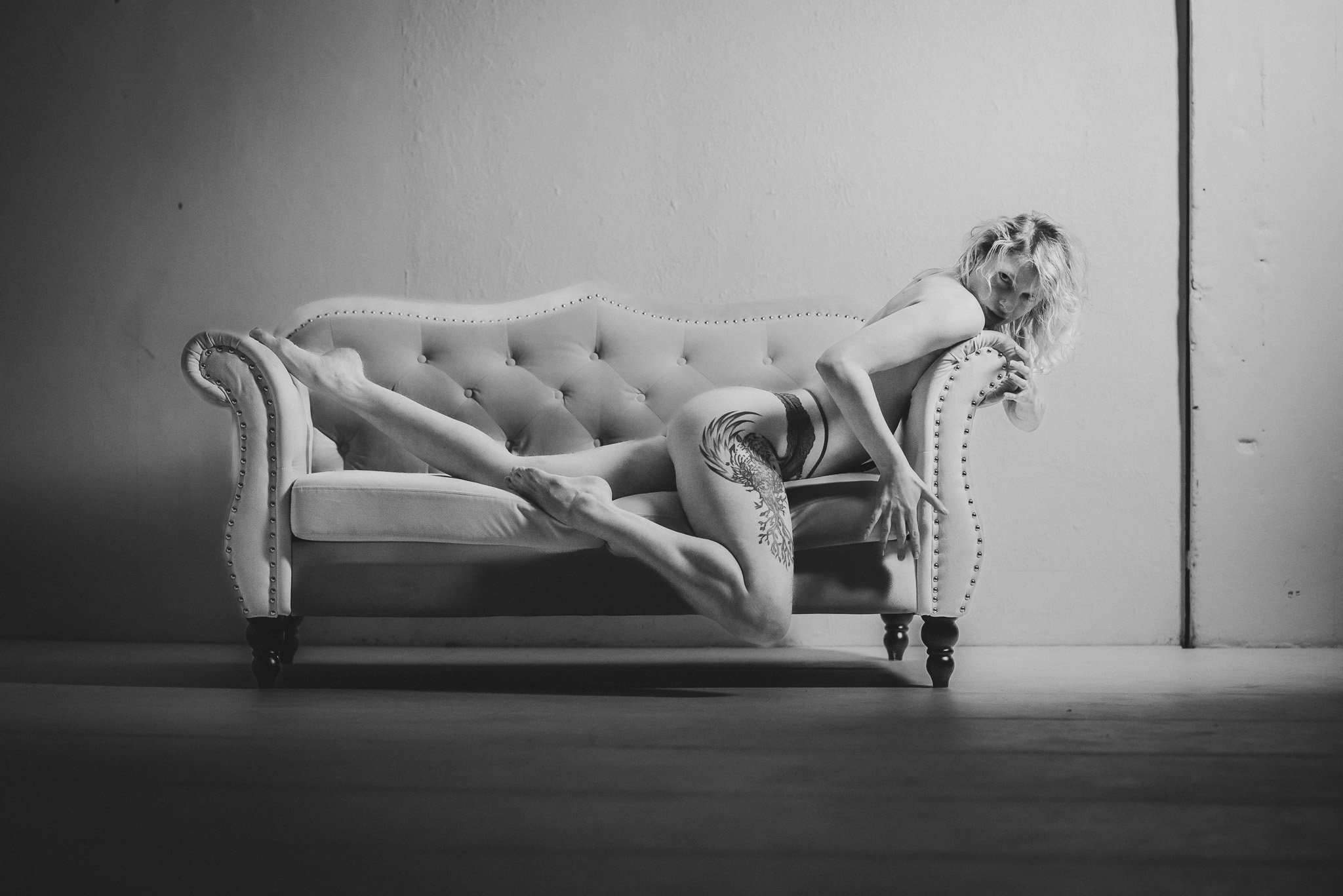
Unveiling the Self: A Visual Exploration of Vulnerability and Liberation
Unveiling the Self is a visual exploration of vulnerability, self-confrontation, and liberation. Through raw, unfiltered imagery, this series captures the tension between suppression and self-acceptance, between restraint and release. In the stark simplicity of black and white, the body becomes a canvas for emotion, telling a story of desire, struggle, and quiet rebellion. Ultimately, these images don’t offer answers—only a question: What does it mean to truly inhabit one’s own body, free from judgment, free from fear?
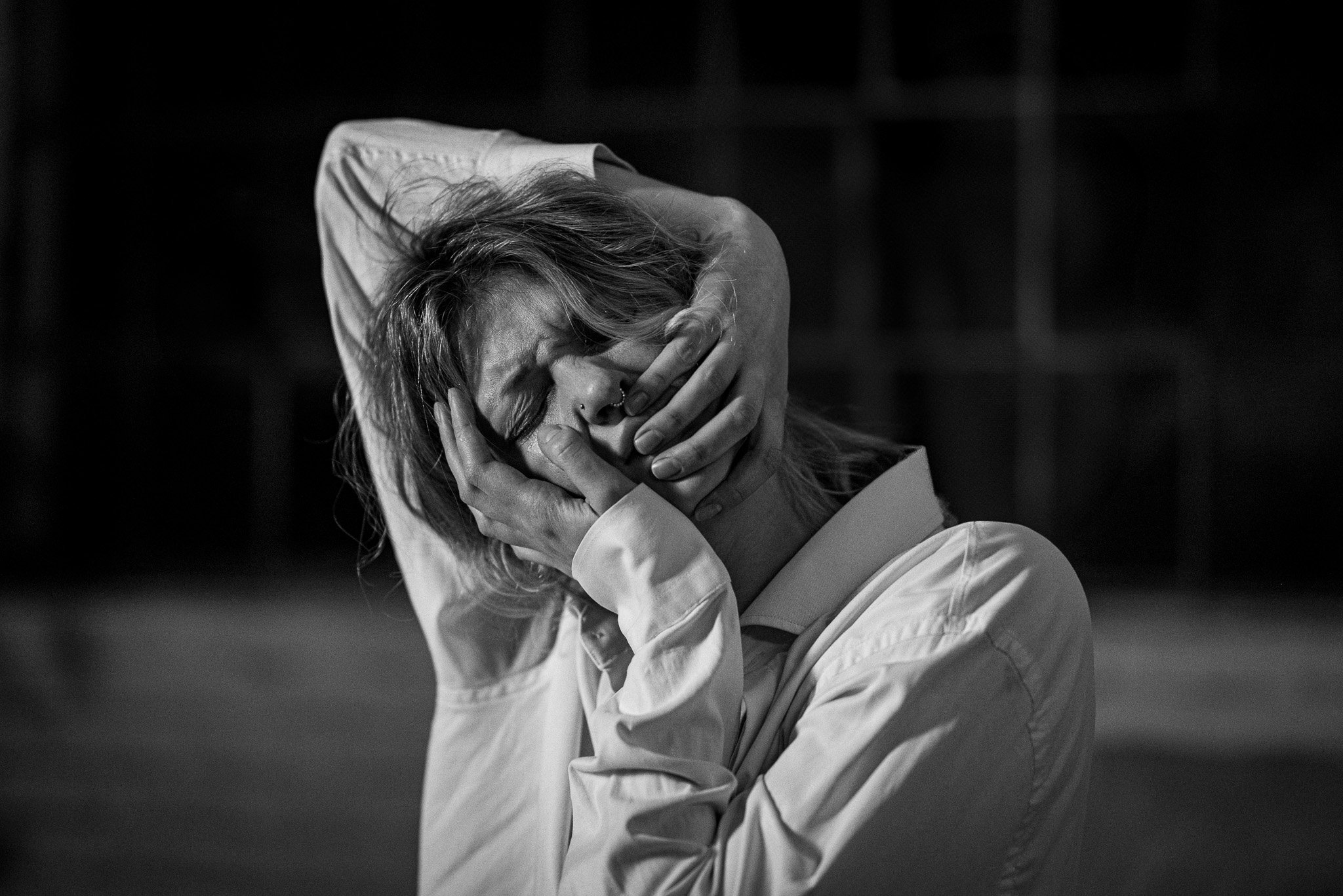
Photography has the power to reveal what words often fail to express. In this series, the images tell a deeply personal and evocative story—one of vulnerability, self-confrontation, and transformation. Each frame captures the body as a canvas of emotion, its posture shifting between tension and release, suppression and liberation. The tattoos etched into the skin serve as quiet echoes of resilience, marking a history of self-expression and survival.
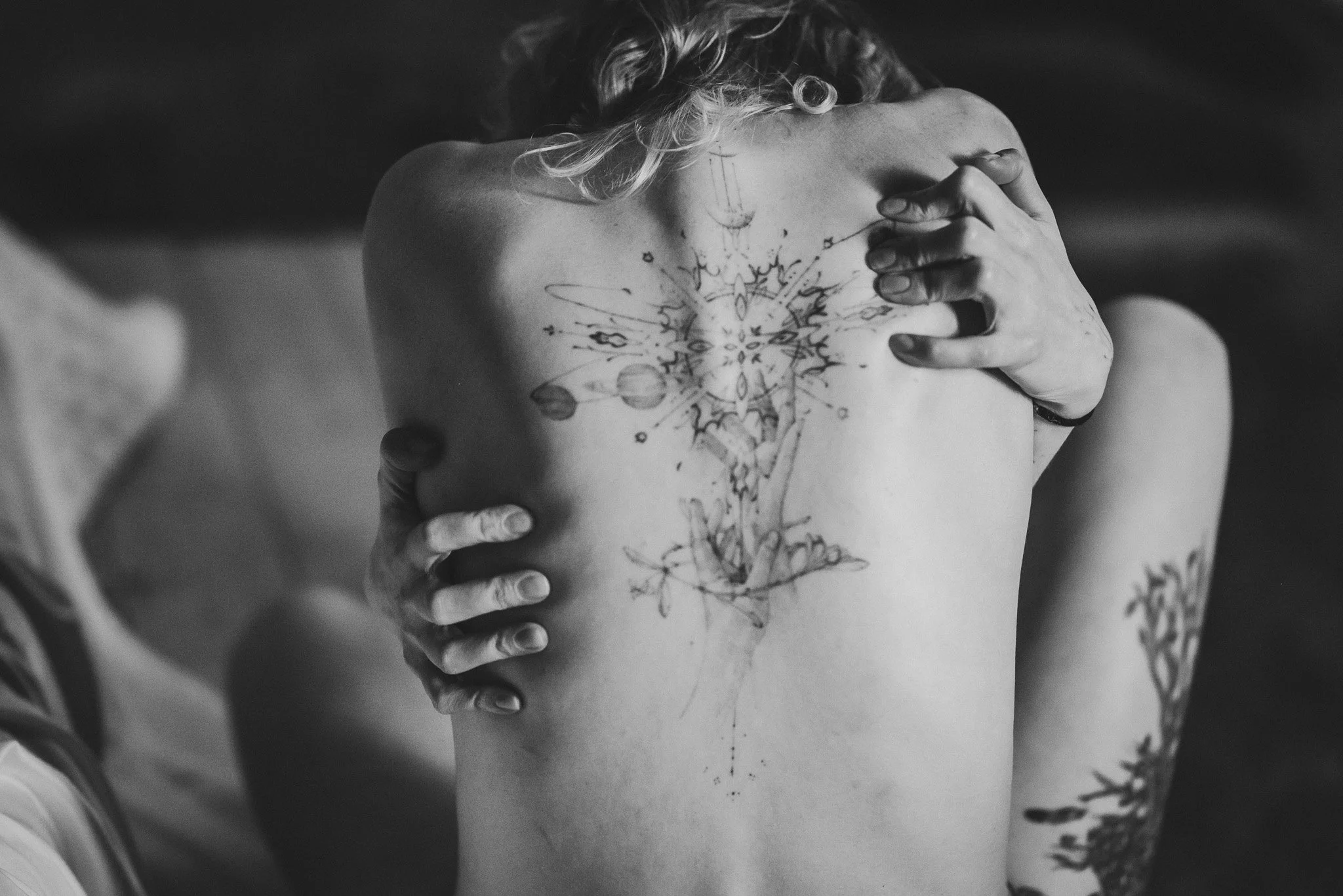
There is a raw, almost tangible energy in these images. The curled body, the grasping hands, the limbs folding inward—each movement speaks to a struggle against unseen forces. A battle with self-doubt, with societal expectations, with the weight of personal history. But then, there is a shift. A stretch, an opening, an unraveling. The moment of surrender, where self-acceptance overrides restraint. These images are not just about physicality; they are about the quiet defiance of reclaiming oneself.
Shot in black and white, the absence of color strips away distractions, leaving only the interplay of light and shadow, of tension and softness. The stark simplicity of the setting amplifies the subject’s presence, making the emotional depth even more striking. There is nothing to hide behind—only the truth of the moment, captured and exposed.
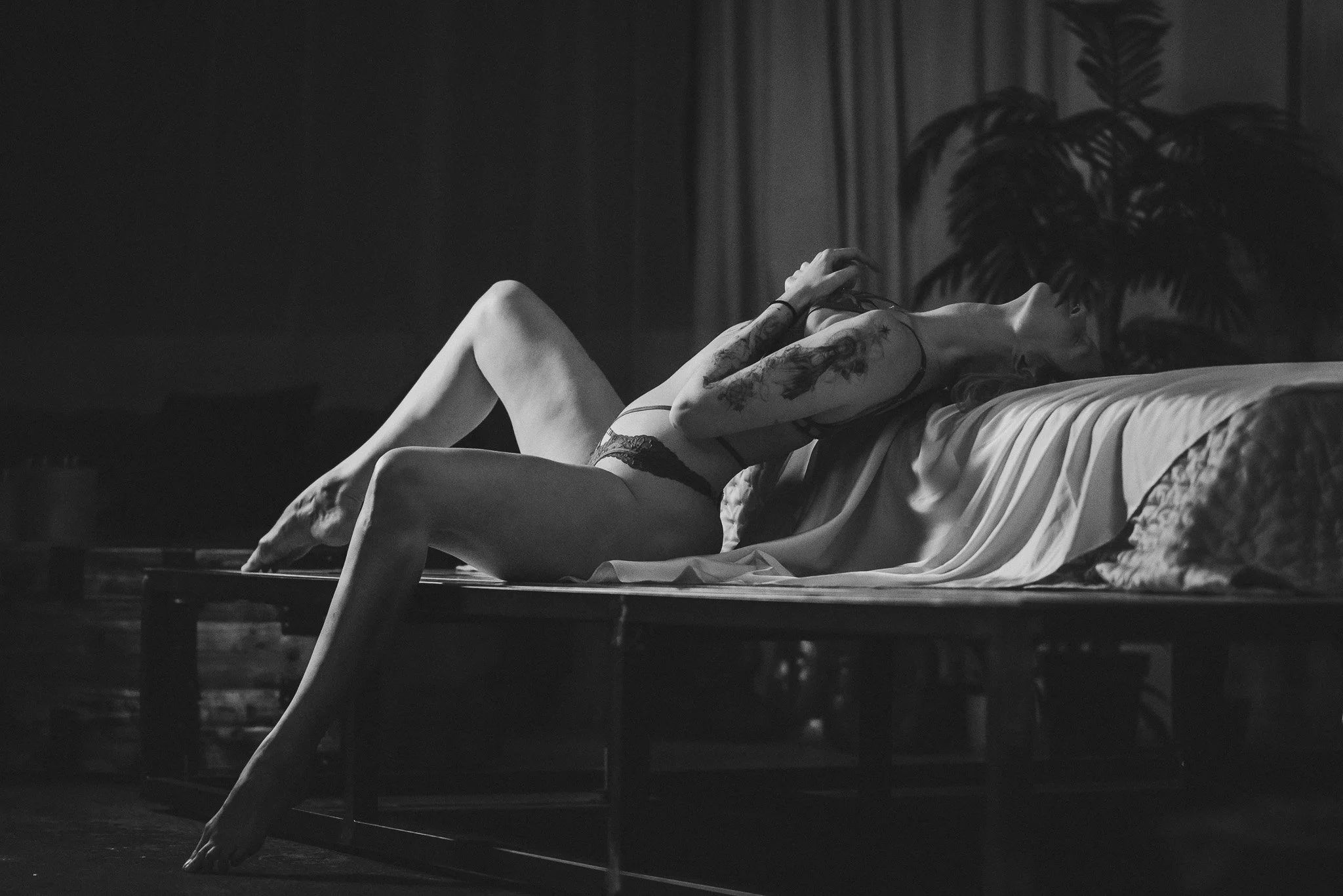
But this series is not just about nudity—it’s about unveiling. Unveiling desire, struggle, and the complexity of self-discovery. It explores the blurred lines between suppression and expression, between pain and pleasure, between vulnerability and power. And, in the end, it doesn’t provide an answer, only a question:
What does it mean to truly inhabit one’s own body—free from judgment, free from fear?